06Natura & Avon2024 · 2025
Natura & Avon
Home, Menu and Login designed as one consultant journey
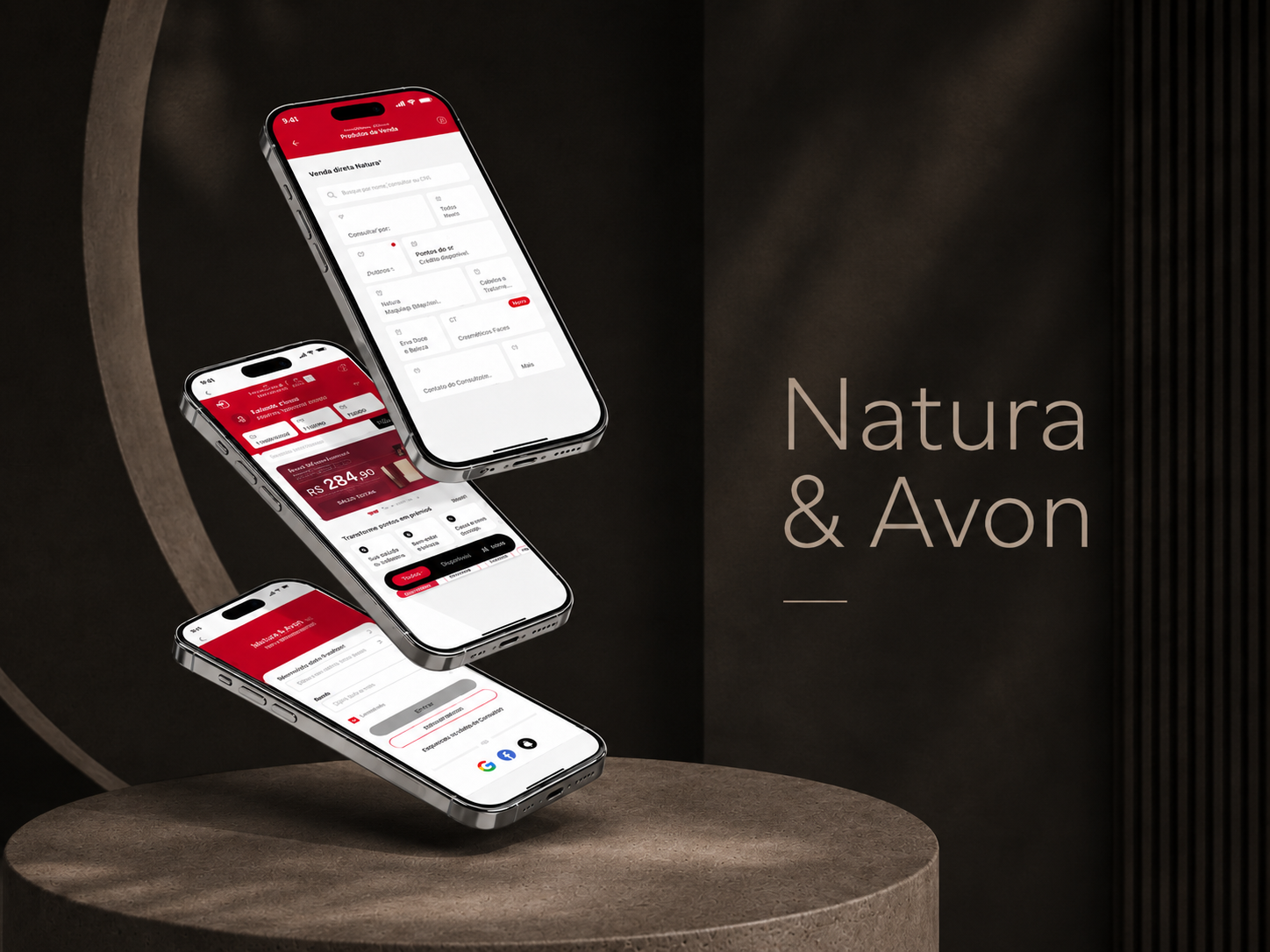
From
To
One consultant entry journey, with the Menu as an ecosystem map.
- Role
- Scope
- Team
- Period
Current state
Context, problem and intervention
Context
The Natura & Avon consultant app is used by independent beauty consultants to run their business: training, orders, campaigns and customer contact. One squad owned the three surfaces a consultant passes through first: Login, Home and Menu, across two design systems that had recently been merged.
Problem
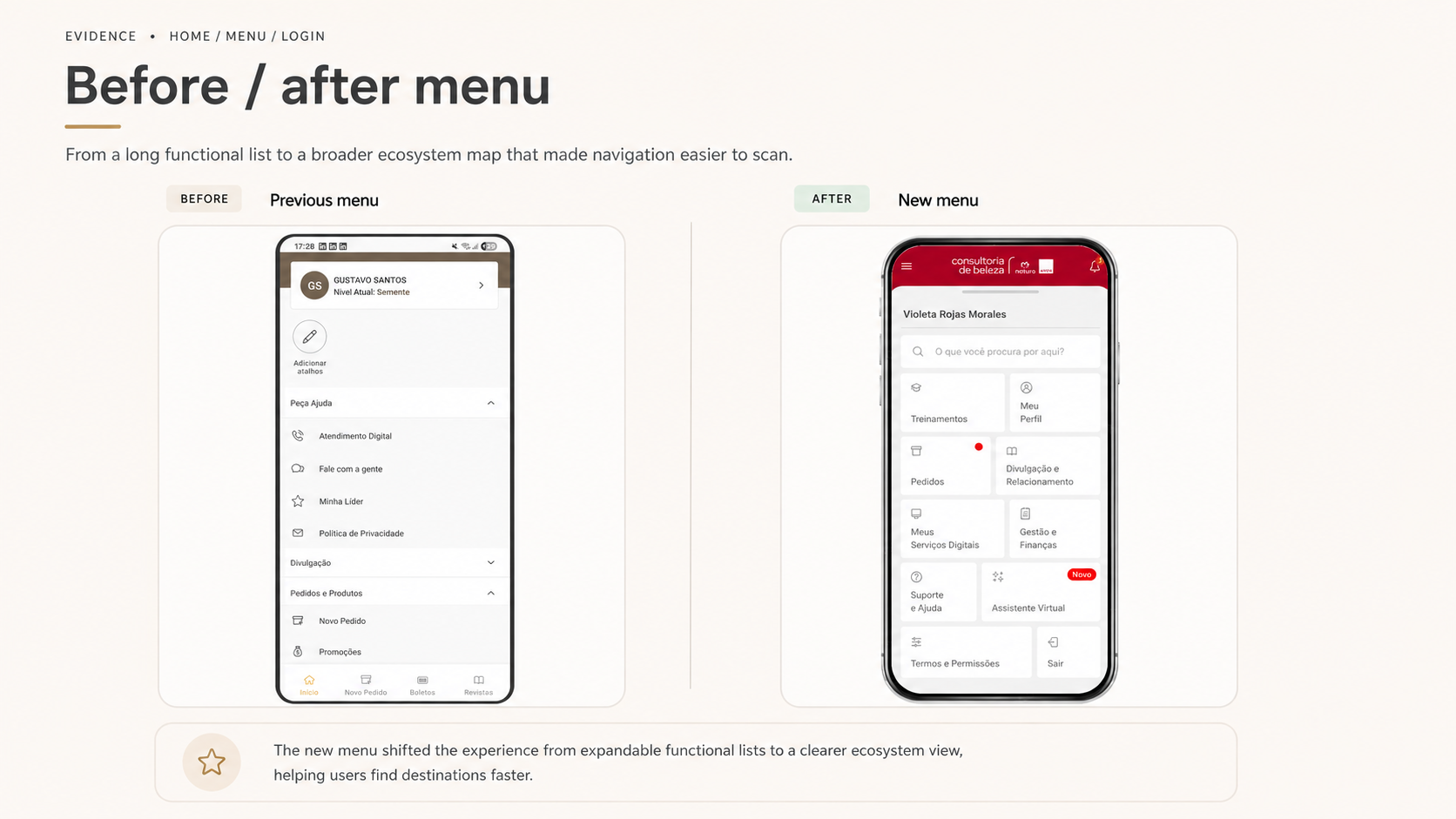
The three surfaces were designed separately. The Menu behaved like a long list of features, and a new consultant had no way to read the product as an ecosystem.
Intervention
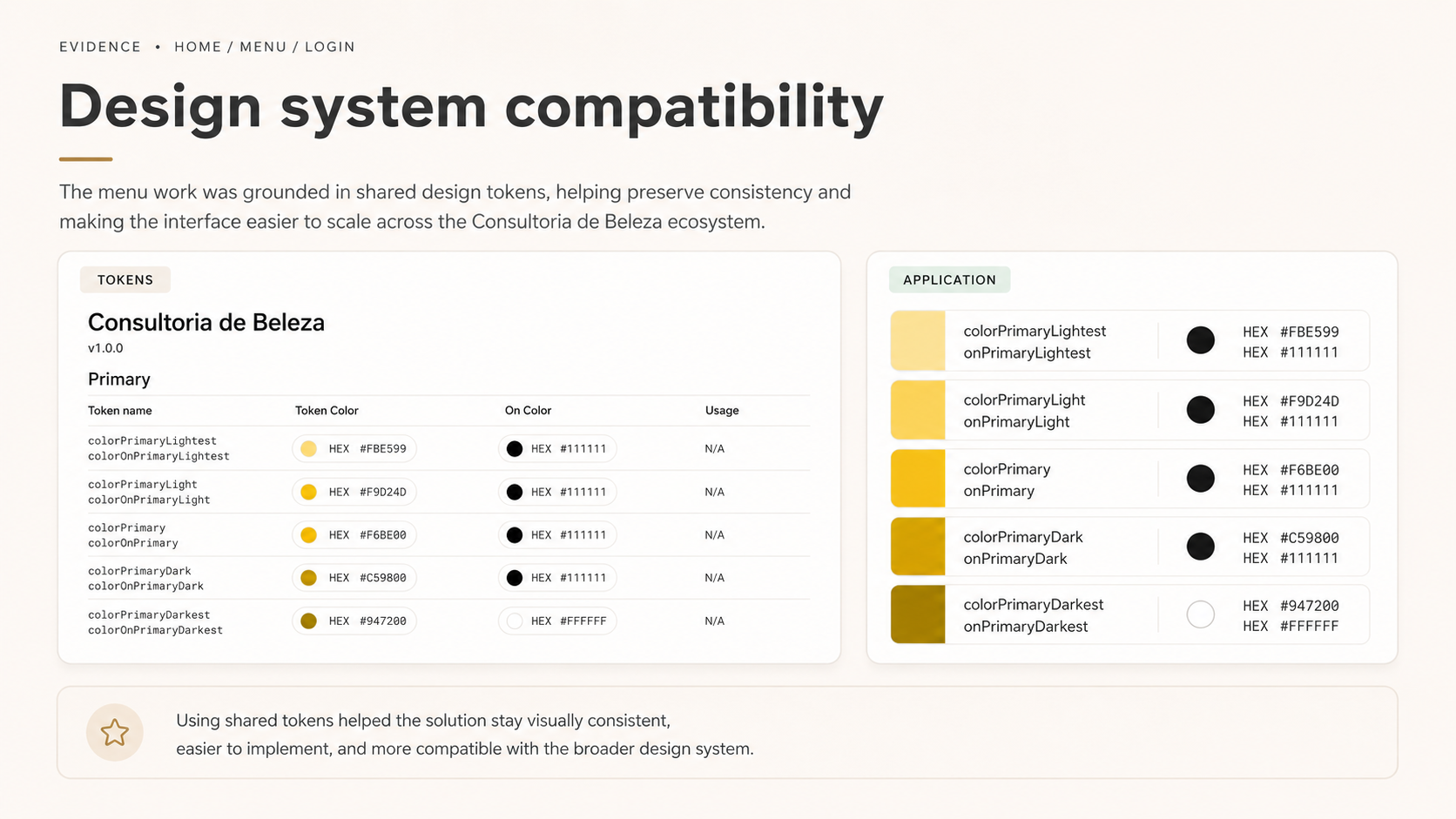
I translated existing journey research into an integrated redesign of the three surfaces, rebuilt the Menu around macro areas, documented an accessibility standard inside the delivery, and created a component layer that reconciled the Natura and Avon systems.
Architecture and delivery decisions
Work from existing evidence rather than buying a new discovery
The cycle was eight weeks and covered three surfaces plus delivery documentation.
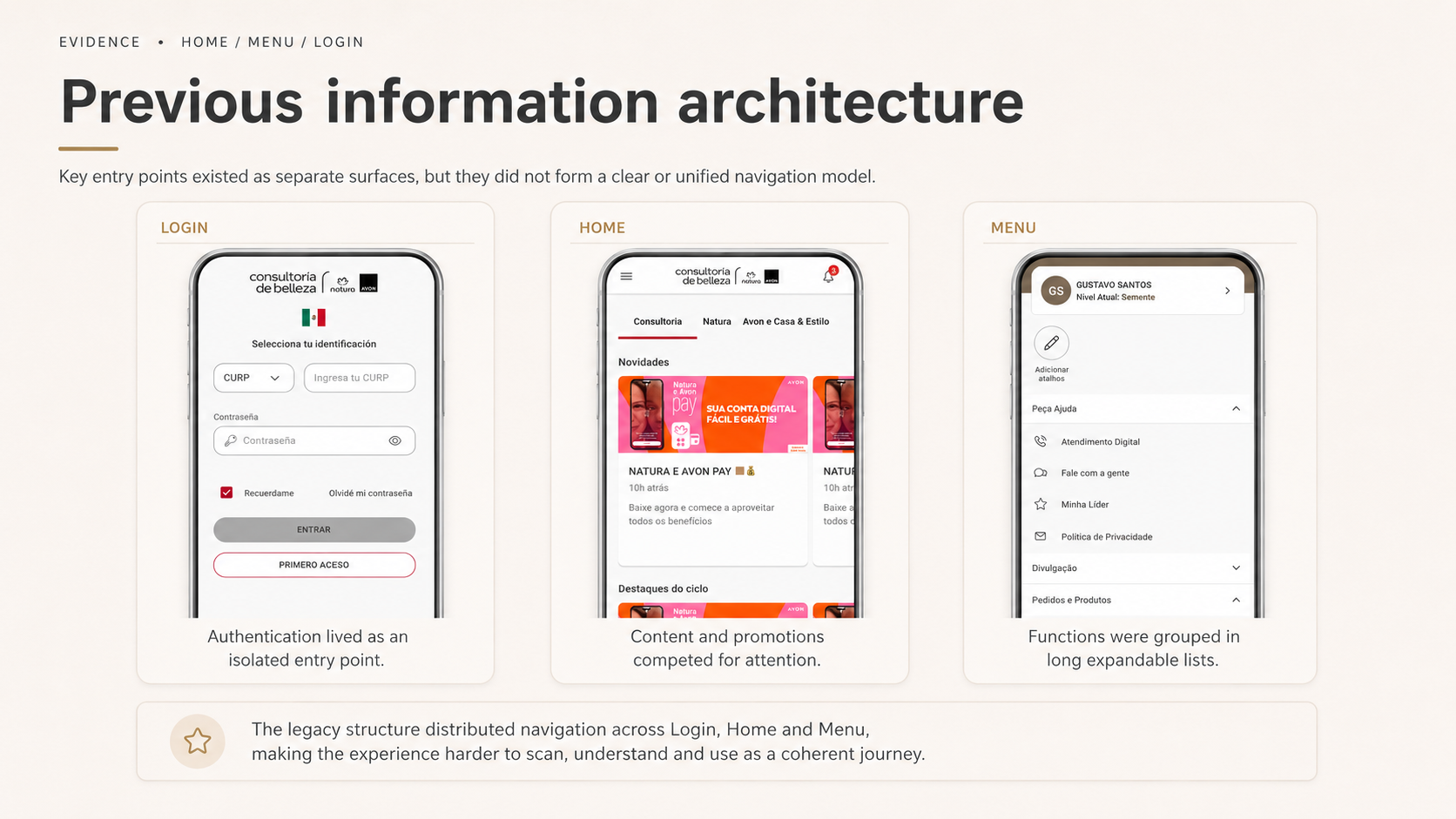
- Evidence
- Prior journey research, real earlier consultant quotes and accumulated team knowledge already described the entry problem.
- Decision
- Ground the proposal in that existing evidence, using new consultants as the sharpening lens, and spend the time on architecture and delivery instead.
- Trade-off
- No new discovery means the information architecture was never validated with users.
- Consequence
- Three surfaces were designed and delivered inside the cycle, and the case stands on architecture judgment rather than behavioral proof.
Turn the Menu from a function list into an ecosystem map
The previous Menu listed features in sequence, with no relationship between them.
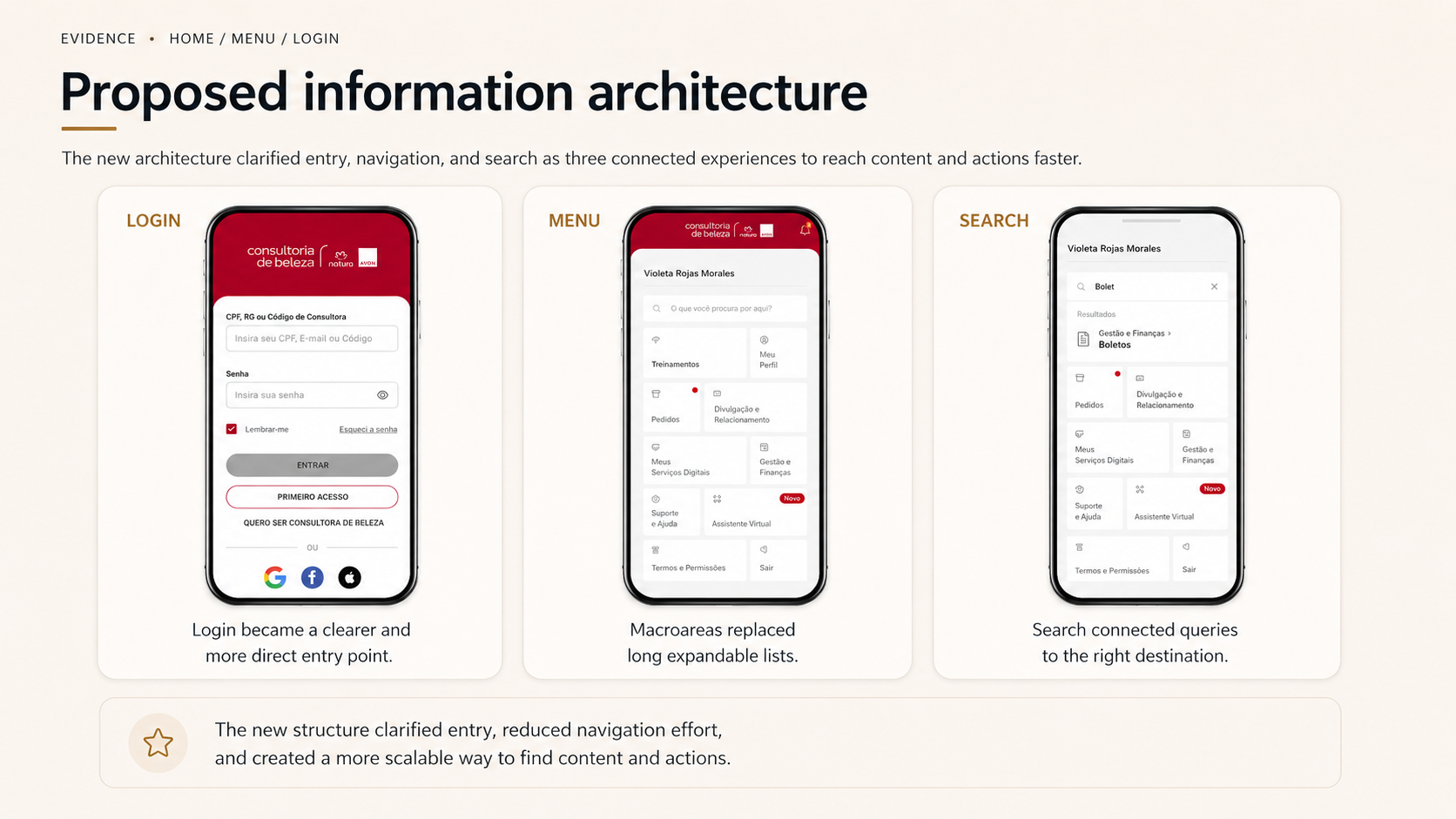
- Evidence
- New consultants were the group least able to infer what the product offered from an undifferentiated list.
- Decision
- Group related activities into macro areas that give each option context, supported by both category browsing and direct retrieval through search.
- Trade-off
- Categories add a decision step for experienced consultants who already know exactly what they want.
- Consequence
- Search covers the expert path while categories make training and key actions visible to everyone else.
Put accessibility specifications inside the delivery
Accessibility documentation usually lives in a separate file and is read after implementation, if at all.
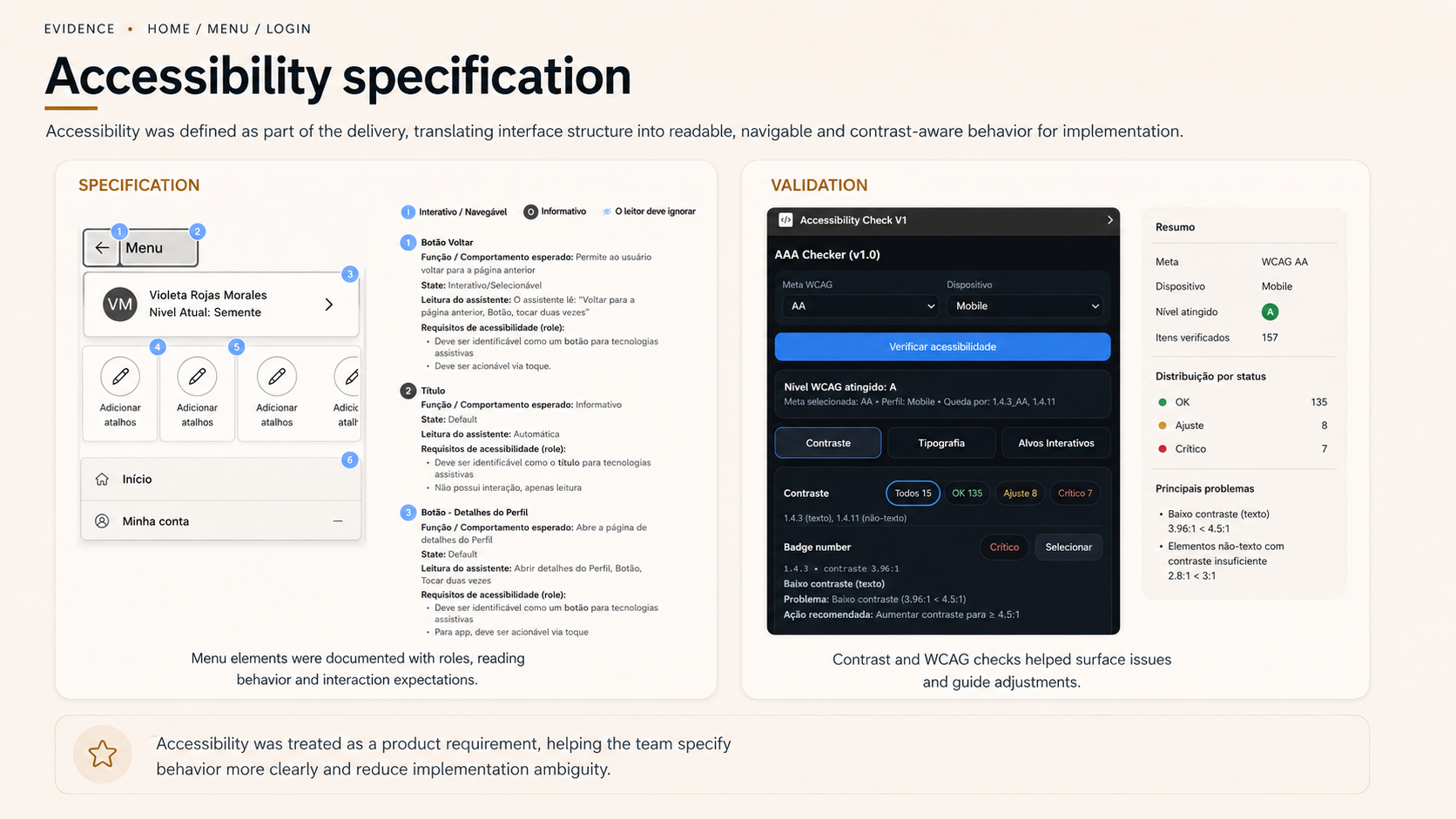
- Evidence
- Specifications that travel apart from the screens are the first thing dropped under delivery pressure.
- Decision
- Apply and document a complete accessibility delivery standard directly in Figma, alongside the screens it describes.
- Trade-off
- Documenting in place slowed the delivery of each screen.
- Consequence
- Specifications travelled with the design, and the repetitive part of that audit work is what produced AAA Checker.
Evidence
Interactive prototype
The Home, Menu and Login flow, running as delivered in Figma.
Constraints and trade-offs
- The delivered set covered splash, login, Home, the expanded state of a Home communication card, Menu and Menu search: the communication view is that expanded state, not a fourth surface.
- Team Components was a deliberately temporary compatibility layer with a shelf life, not a proposal to replace either design system.
- Figma was the delivery source of truth; Confluence and Jira documentation is not attributed to me.
Outcome
Design coordination directed prioritization and approved the final direction. What remains unknown is whether the interfaces were implemented as delivered and whether later decisions altered the direction.
Delivered
- Approved integrated design direction across Home, Menu and Login.
- New information architecture for the Menu, with category browsing and search.
- Accessibility delivery standard applied and documented in Figma.
- Team Components: a shared compatibility layer used beyond my squad.
Not measured
- User validation of the new information architecture.
- Implementation, engagement or conversion outcomes.
Next case
GDO Acceleration Plan